
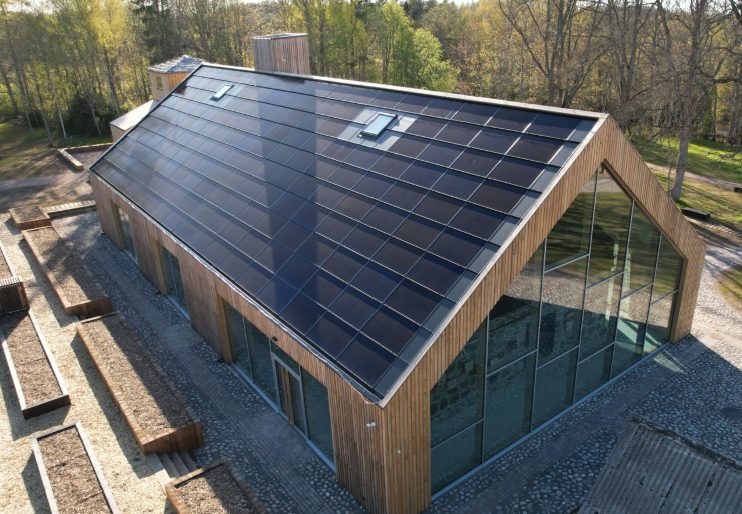
Flat and low-slope
Industrial and multi-tenant commercial
Large roof planes and steady daytime load make these the strongest candidates for hosted storage and energy sales alongside a roof replacement.
For commercial, industrial and multifamily owners and developers
Quad Services designs and bids the solar, storage and GPU-ready infrastructure for your building, as your owner's rep. Our development partner All Good Energy underwrites what the energy is worth and brings long-term asset managers who fund, own and run the whole system. You collect site lease income and buy power below utility rates, with nothing on your capital stack.
California first. Title 24 already requires solar and storage on new high-rise multifamily and most nonresidential buildings. We turn that cost line into a revenue line.
** Representative figures. Utility rates are approximate 2026 averages (EIA, CPUC); NOI depends on building size, site qualification and final offers.
Who this is for
New construction and existing portfolios both qualify. The strongest sites have large roof planes, daytime load, room for a container in parking or unused space, and fiber nearby.
Flat and low-slope
Large roof planes and steady daytime load make these the strongest candidates for hosted storage and energy sales alongside a roof replacement.
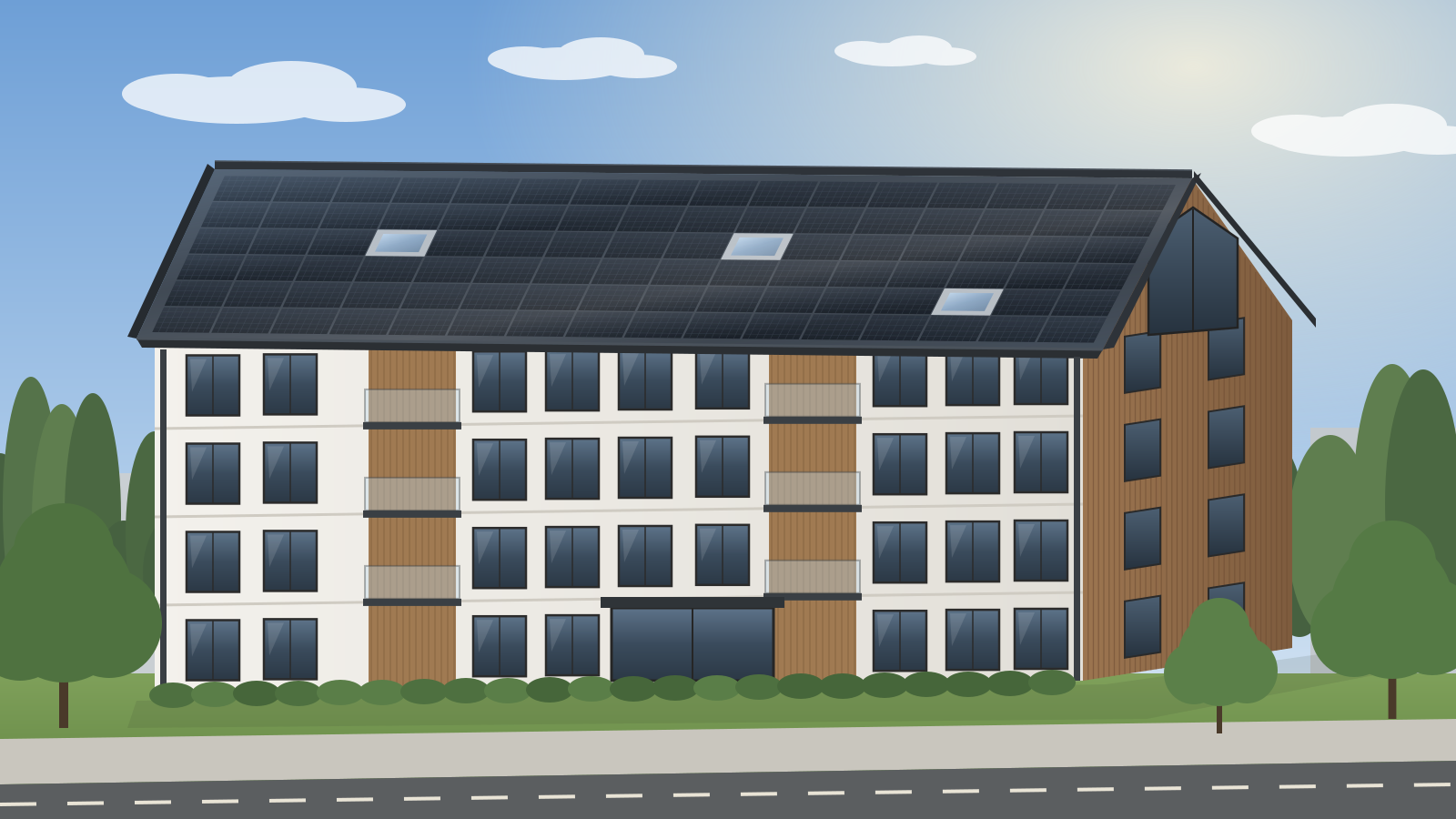
4+ stories
Solar and storage are required by code. Resident energy value plus site lease income or revenue sharing for the owner, with tenant billing handled.
Office, retail, hotel, school
Where roof area meets the threshold, the code asks for solar and storage. Firm power for new loads such as EV, HVAC and compute, and revenue from the surplus.
Several sites
Share bills, meter data or just a list of addresses. We rank every site by what it can save and earn, then bid the top ones.
Why now
Since 2023 new high-rise multifamily and most nonresidential buildings in California need solar and storage. The 2025 code, in force since January 1, 2026, tightened both. Builders treat it as a cost line. Each part of that cost line is a service we provide.
| Building type | What Title 24 requires | Since | Who decides | What they need |
|---|---|---|---|---|
| High-rise multifamily4+ stories | Solar PV and battery storage, sized by code equations, capped by usable roof area | 2023updated 2026 | Developers, owner's reps, GCs, capital partners | Capital that takes it off the budget, and a way to bill tenants |
| Nonresidentialoffice, retail, warehouse, school, grocery, hotel | Solar PV and storage where roof area meets the threshold; community solar or storage can satisfy part of it | 2023updated 2026 | C&I developers, owners, tenants with energy spend | Firm power for new loads and revenue from surplus |
| Low-rise multifamily1–3 stories | Solar PV sized to floor area and climate zone; storage can offset part of the PV | 2020updated 2026 | Production builders and their trades | A design that bids cleanly and a roof that does two jobs |
| Existing buildingsre-roof or retrofit | No mandate. A new roof is the one moment solar is cheapest to add, and rising rates make storage pay | ongoing | Owners, asset managers, property managers | A site lease and a rate below the utility, with no capex |
CEC 2025 Energy Code, Sections 140.10 and 170.2. Verify thresholds per project with a certified energy analyst.
The economics
Energy made and stored on site is worth more than energy from the grid, because every stream lands in your NOI. Under the funded pathway, GPU compute pays a site lease; energy sales to the GPU tenant apply when you own the system yourself.
Residents and commercial tenants opt into a solar subscription on one combined utility and solar bill, at a lower rate than the utility.
Pays: subscription paymentsElevators, lighting, pools, HVAC and parking run at the onsite rate instead of the retail rate.
Pays: lower operating costsMany batteries act as one power plant at peak times. Utility and grid programs pay batteries to discharge when power costs the most.
Pays: utility and grid paymentsA containerized GPU computing unit runs on extra and stored solar, leases space from you, and buys the power you do not use.
Pays: site leaseA day on your roof
Solar powers the building as it generates. Energy the building does not use charges the battery, which then runs the building through the evening peak or powers the GPU computers on site. Nothing is wasted and nothing is exported for pennies.
Live solar covers daytime load at the onsite rate. Surplus goes into storage instead of out to the grid.
Stored solar runs the building when utility power costs the most, lifting the value of each solar kWh toward the peak rate.
Firm power from storage and surplus solar feeds the onsite compute. The GPU tenant is metered, billed by source, and pays for every kWh it takes.
On your property
Solar on the roof or over parking. Batteries and the GPU unit in sealed, fire-protected enclosures in unused space. The rest is switchgear, meters and wiring. Every project gets a site-specific plan.
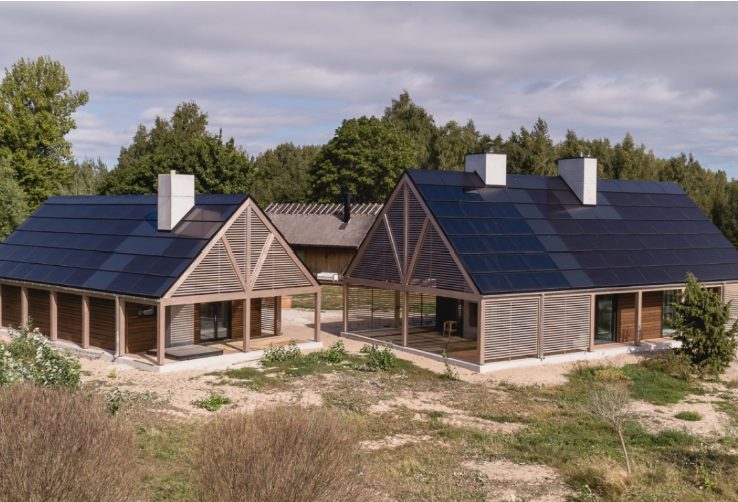
Bolt-on panels, carports, or a Quad+ solar roof where the roofing itself is the array. Sized to the site and designed as two comparable sets so you can see the options side by side.
Central container, cabinet or portable units from our equipment partner Smart Cells. Every cell monitored, fire suppression built in, insured and financeable. Only storage that can be insured is installed.
A self-contained enclosure, starting at a 20 ft container, that runs on surplus and stored solar. It pays the site lease and buys the power you do not use.
Sub-metering and energy management that split the bill by source and by hour, so the GPU tenant and each building meter are billed exactly for what they used.
Will-serve letters, capacity requests and interconnection handled with the utility on your behalf. Batteries can sell back to the grid under utility programs.
GPU hosting needs a 1 Gb internet connection at the site for energy management and data center operations. We confirm it during the free site review.
Site requirements for the funded program
Sites that do not meet the requirements can still use the cash pathway, or a batteries-only configuration where peak-hour value is billed to tenants as added savings.
Who does what
One contract and one point of contact. Behind Quad Services is a bench chosen because each firm has already done its part at scale. Every funder is named in writing in every offer.
Works for you · Owner's rep
Your point of contact. Designs the project, prices a Quad+ solar roof against regular solar and storage, gets bids from three contractors on identical scope, and quality-checks the build from permit to switch-on.
Paid from the project. Cash builds: 3 to 5% of build cost, paid at completion. Funded builds: 2% of the infrastructure financed, paid by the funder. Shown openly in every proposal.
Development partner · Energy value and capital
Finds what your onsite energy is worth and brings investor capital so the system can cost you nothing upfront. Agentic systems model load, solar, storage and GPU fit for all 8,760 hours of the year against your actual tariff; a person signs off before anything reaches you.
Paid by the investor, not you. A development fee when a finished, lower-risk project passes to the asset manager. Built on the shared-meter billing experience from Ivy Energy, which handled billing across roughly 1 GW of solar.
Owns it · $0-upfront pathway
Investment firms that pay for, own, insure and operate the solar, storage and GPU infrastructure for the full contract, and stand behind your fixed rates. They provide bankable offtake for GPU consumption and grid services and deploy only insured, bankable storage.
Named in writing in every offer. Current partners include OSA and EDGE, with others matched to the project.
Builds it
Wins the job in a fair, side-by-side bid. Licensed, warrantied install, with city, fire and utility approvals handled.
Matched to the project by market, utility territory and building type.
Equipment
Smart Cells supplies the storage: cell-level monitoring, built-in fire suppression, insured. QuadRoof supplies the Quad+ integrated solar roof where a roof is due anyway.
Certified. Quad+ carries UL 7103, Intertek Class A fire and IEC 61215 listings, with a granted US patent on the framing.
Data and payments
How we read your utility data to model the site, and how tenants opt in and pay for onsite energy once it runs. One combined statement, collections and remittance to you.
Authorize once, revoke any time. Your interval data, tariff and bills are shared securely for the model.
How a project starts
New buildings already need solar, so we join at the design stage. For existing buildings and portfolios, we start with your data and rank where the money is.
Track 1 · New construction
Quad Services reviews the plans with your architect and MEP, using the roof material you already spec'd.
Quad+ solar roof vs regular solar, plus storage and GPU fit, as two permit-ready design sets.
Three contractor bids on identical scope. Pay cash, or take the $0-upfront offer through All Good Energy and a named asset manager.
Installed as part of the construction timeline, never on your critical path.
Lower rates and lease income from move-in day. Billing, income splits and reporting run for the life of the system.
Track 2 · Existing buildings and portfolios
Bills, meter data through Public Grid, or just a list of addresses.
Every site ranked by what it can save and earn, with the fiber and power headroom check for GPU hosting.
Cash vs $0 upfront, and three bids for each top site.
New solar roof, racked PV, storage, or add-ons to existing solar.
Savings and income tracked site by site for 20+ years.
Questions owners ask
Evaluation, underwriting and modeling cost you nothing. Quad Services earns its owner's rep fee from the project, at completion on a cash build or from the funder on a financed build. All Good Energy earns a development fee from the investor when a finished project passes to them.
A site lease for the roof or unused space, and optionally a power purchase agreement if you want to buy the energy at the onsite rate. The asset manager, not you, owns and operates the equipment. Quad Services stays your single point of contact.
Only storage that can be insured and financed is installed. Smart Cells units monitor every cell, include built-in fire suppression, and carry the certifications utilities, fire marshals and insurers require. Every battery system is insured. Compute sits in a sealed, fire-protected enclosure.
Then the offer is batteries only. Storage shifts your solar into the evening peak, the added savings are billed to tenants, and you share the upside. The cash pathway with three bids is always available.
Yes. Tenants opt into a solar subscription on one combined utility and solar bill at a lower rate, through Public Grid. Common areas run at the onsite rate too, which lowers your operating costs.
Long-term GPU and energy infrastructure investors such as OSA and EDGE, matched to the project. The funder is named in writing in every $0-upfront offer before you sign anything binding.
Next step
An address is enough. Bills, meter data or plans make the model sharper. We come back with a site-specific model, the two design options, and, if the numbers work, a written offer with the funder named.
Development partner
All Good Energy · California
Parent company
QuadRoof · Quad+ Solar Roof